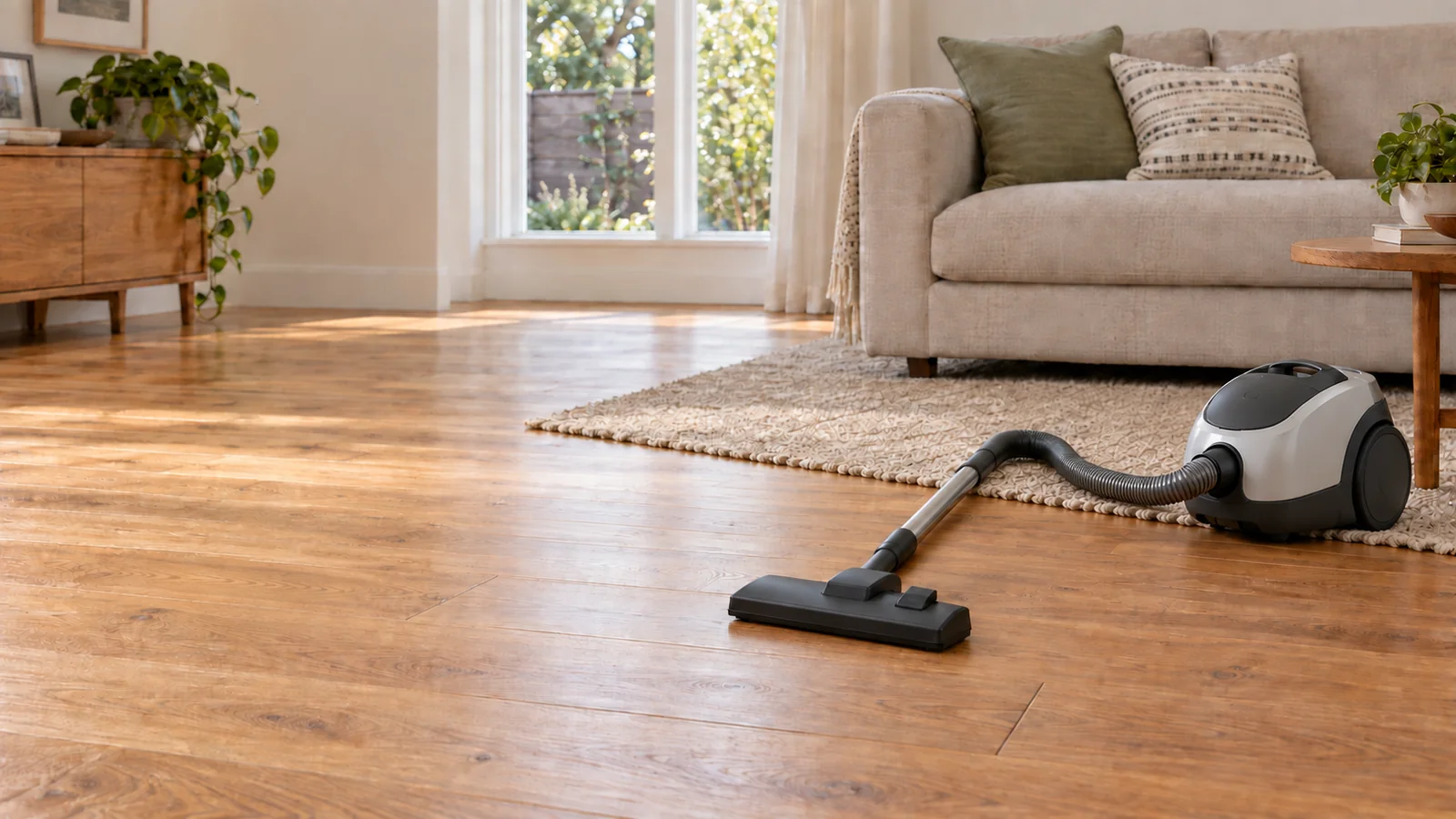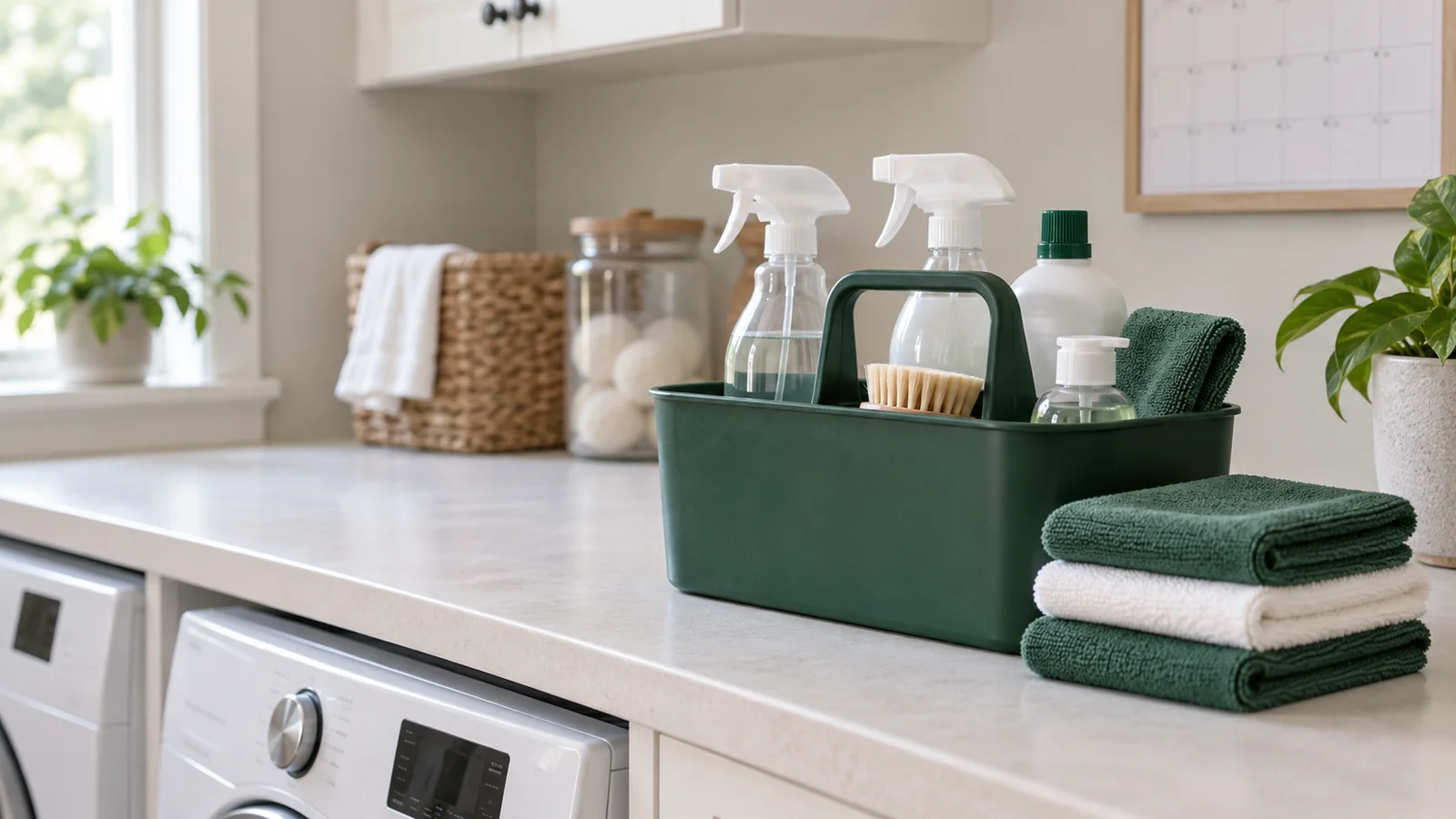

A living room collects several kinds of mess at once: cups on the table, dust on shelves, crumbs between cushions and grit near the entrance. Each needs a different response. This guide gives you a sensible cleaning order, shows where material labels matter and helps you finish with a room you can actually enjoy. You do not need to complete every detail in one session.
START HERE
The short answer
Clear a workable area, collect dust from higher surfaces, care for upholstery according to its label, then clean glass and floors. Treat a spill as a separate task: the right method depends on the fabric or finish, not just the stain.
Jump to the checklistThe essentials
- Clear the working area, remove loose dust, then clean the floor.
- A sofa cover with a zipper is not automatically machine washable.
- Use material instructions, not a single homemade recipe for everything.
What to have handy
- Clean microfiber cloths and a separate soft screen cloth
- Vacuum with suitable floor, upholstery and crevice attachments
- Basket for misplaced items and a small trash bag
- Surface-compatible cleaner and a dry finishing cloth
Clear the room without turning it into a bigger project
Start with a walking route from the entrance to your seating area. Collect dishes and trash, then place items that belong elsewhere in a basket. Return them after the room is clean rather than leaving the room with every item. Set papers and valuables aside without discarding them automatically.
Choose today’s stopping point: a light reset, a regular clean or one detailed task. If you only have a short window, clearing the coffee table and removing visible crumbs is a useful result. Save cabinet sorting and large furniture moves for a separate session.
Work through the dust in a clear order
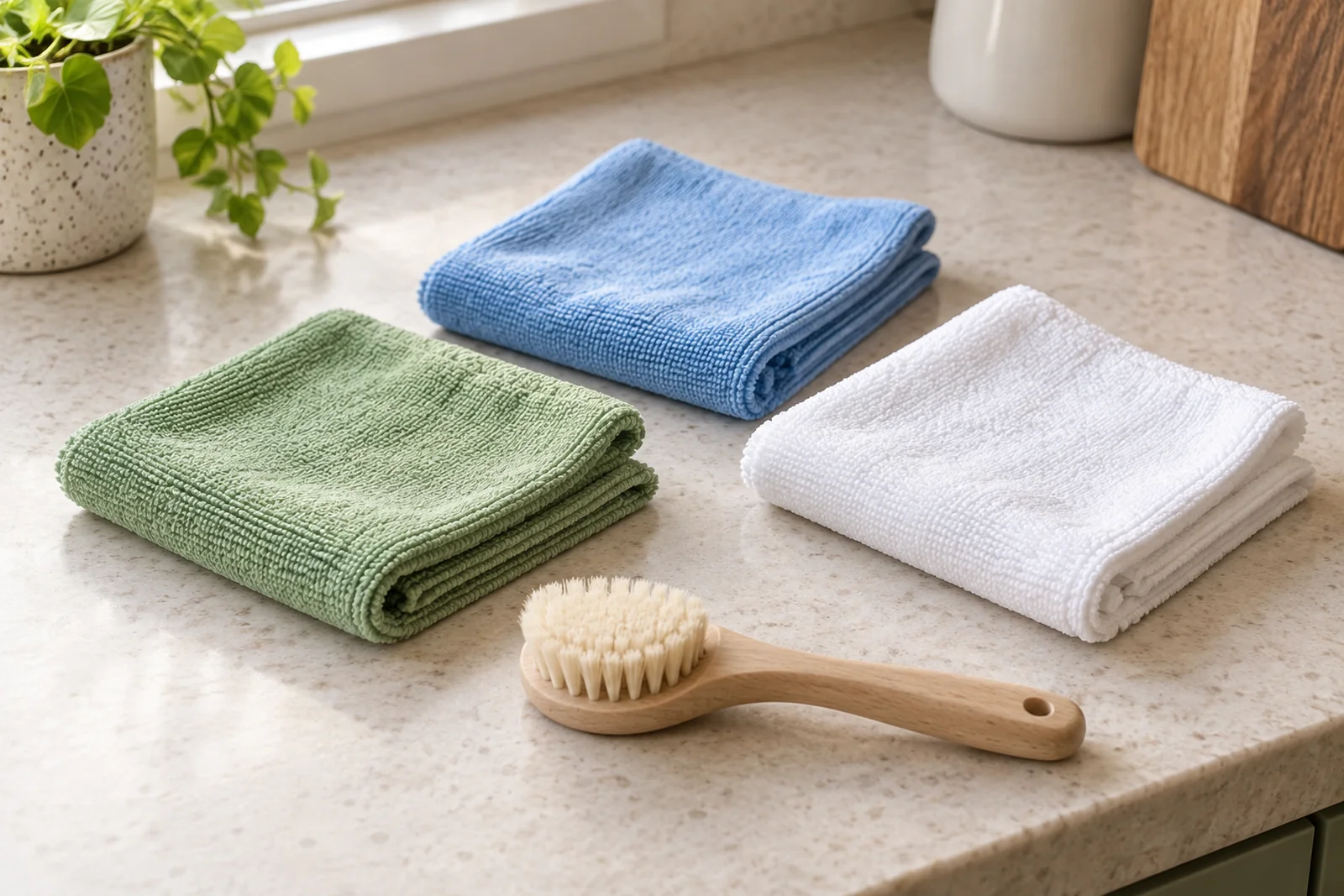
Work around the room in one direction. Begin with safely reachable higher surfaces, then shelves, tables and lower edges. Lift small objects to clean beneath them instead of drawing a cloth around every outline. Use a clean face of the cloth when it becomes visibly dirty.
Match the method to the finish. A dry, soft cloth is a conservative starting point for loose dust; a compatible cleaner may be needed for fingerprints or sticky residue. Avoid balancing on chairs to reach fans or high ledges. Leave anything outside safe reach for a suitable tool or qualified help.
Look beyond the coffee table
Work around the room in one direction so small surfaces do not disappear from your plan. Include the top of low bookcases, the accessible face of the TV stand, lamp bases and the edges of side tables. Put delicate objects on a stable surface only if you can handle them safely; do not balance them on a sofa while vacuuming.
Before wiping a lamp, switch it off and let it cool. Use the care instructions for its shade and finish; fabric shades, painted metal and glass do not all tolerate the same treatment. For a remote control, follow the device guidance and keep liquid away from buttons, openings and batteries.
Read the sofa label before treating a spot
Remove loose items between cushions and use the upholstery attachment if the furniture instructions allow it. A removable cushion or zipper does not establish a washing method. Find the care label under the furniture or cushions, and treat an unknown code as a reason to pause before applying liquid.
| Code | General meaning | Practical decision |
|---|---|---|
| W | Water-based upholstery cleaner | Follow the label; do not soak the fabric. |
| S | Solvent-based cleaning | Do not substitute water; consult the maker or a specialist. |
| WS / SW | Specified water-based or solvent products | Use only the method approved for that fabric. |
| X | Vacuuming or light brushing | Do not apply water or solvent cleaner. |
Handle pet hair, throws and cushions
Start with loose hair before introducing any moisture. Use an upholstery attachment permitted for the fabric, checking seams and cushion edges with gentle passes. Remove a cushion only if it is designed to come off. Stop if trim, loose threads or buttons catch in the tool.
A removable cover is not automatically machine washable. Read the textile label before washing throws, pillow covers or pet bedding, and follow its drying directions before replacing them. If an odor remains after routine care, identify its source rather than adding fragrance; a spill in the cushion filling may need an upholstery specialist.
Give screens and glass different treatment
Turn the TV off and follow the model’s cleaning instructions. Use a dedicated clean, soft cloth with very light pressure. Do not spray liquid onto the screen or use ordinary window cleaner. If a dry cloth does not remove a mark, check the manufacturer’s approved next step rather than increasing pressure.
For mirrors and interior window glass, check for special coatings and use the recommended product. Keep liquid away from frames, electronics and nearby stone. Work with a clean cloth; if you see streaks, check for remaining product or a dirty cloth before adding more cleaner.
Finish with the floor and handle spills separately
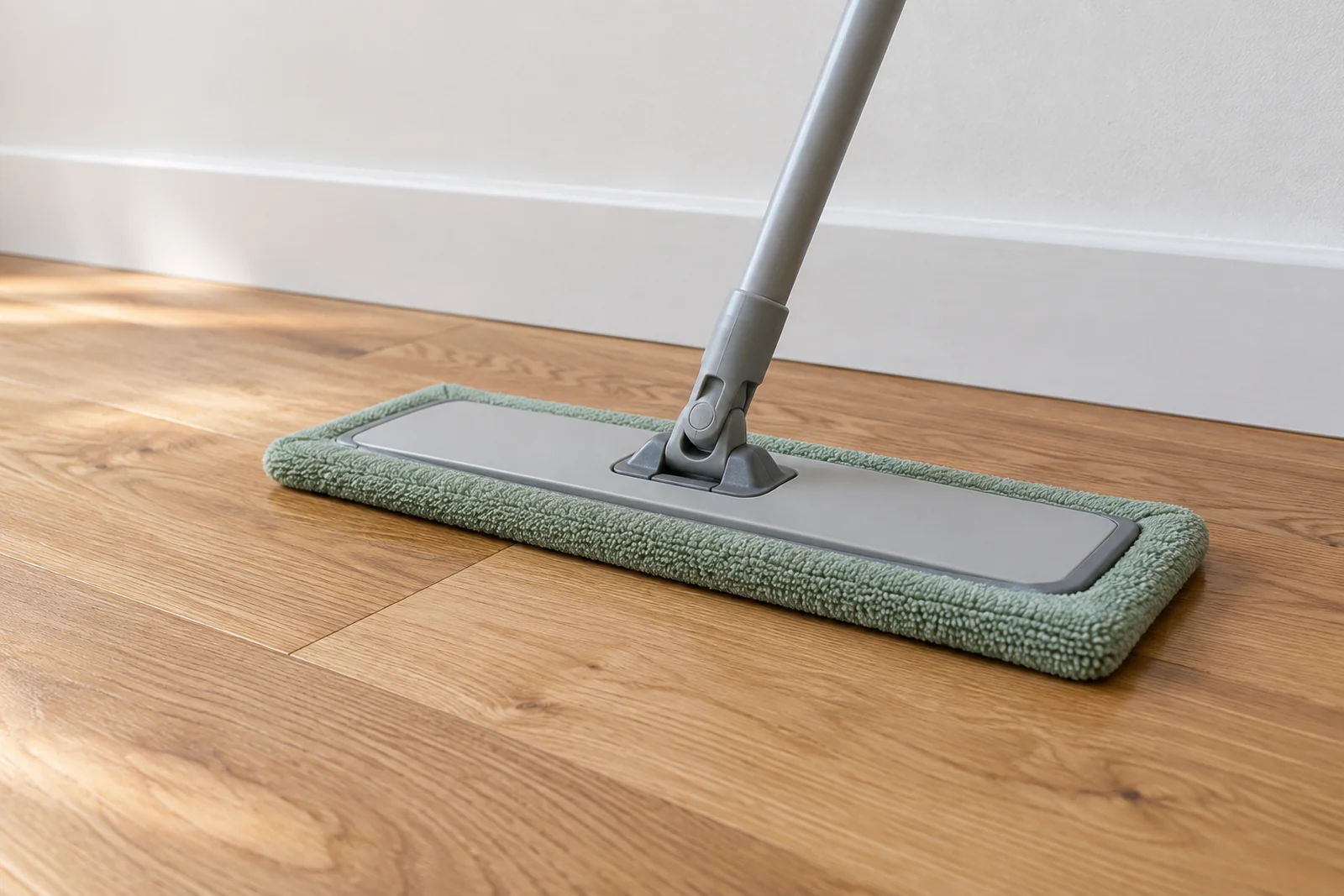
Pick up small hard objects before vacuuming. Use the correct floor setting, reach accessible edges with a crevice tool and make deliberate passes through the places people walk. Clean hard flooring with its approved method after loose grit is gone. Do not drag heavy furniture simply to complete a checklist.
For a fresh carpet spill, blot with a plain white absorbent cloth instead of scrubbing. Test an approved spot product in a hidden area, then follow its directions and work from the outside of the spot inward. Stop if color transfers or the material changes. Persistent stains deserve a carpet specialist’s assessment.
Choose a useful stopping point
When time is limited, finish the seating area and walking path before starting hidden details. Clear the table, collect visible crumbs and dust, and vacuum the area you will use. Save the entire bookcase or a delicate collection for a separate session so the room remains usable.
At the end, look across glass and furniture in side light. Check that you have not left streaks, damp cushions, a wet floor or cleaning tools behind. Return only the items that belong in the room. This final check is more useful than applying extra product to make everything smell freshly cleaned.
Build a routine around what you notice
Use these intervals as a starting point, not a rule for every household. Food, pets, room use and the time you have will change the frequency. A room used all evening may need more attention than a sitting room used occasionally.
| When | A useful focus |
|---|---|
| After use | Return dishes, remove food debris and respond to spills. |
| During a regular weekly pass | Dust reachable surfaces and vacuum the seating and floor as needed. |
| One rotating detail task | Choose a shelf, reachable baseboards or interior glass instead of doing every detail at once. |
PUT IT INTO PRACTICE
Your cleaning checklist
Follow the steps that fit your home and mark your progress as you go. Check the care instructions for each material before you begin.
WHEN THE RESULT IS NOT WHAT YOU EXPECT
What to try next
Choose the issue you are noticing. More product or harder scrubbing is not always the answer.
Good questions. Practical answers.
GONCAN IN YOUR COMMUNITY
Want a hand with the cleaning?
These living room cleaning habits work in an Oakland apartment, an Alameda home or a San Leandro household: identify the material and respond to how the room is used. For help with regular or detailed residential cleaning, Goncan offers a personalized estimate across its listed East Bay service communities.
Written by Goncan Cleaning Services using the care references linked throughout this guide. Follow the directions for your specific products and materials.